
• Blog
  • About
  • Contact
  • Speaking
  • Writing
  • Like Our Father
  • The Great Big Sad
  • Who Are You?
Menu

Christina Fox

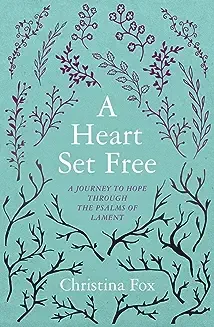
A Heart Set Free
  • Blog
  • About
  • Contact
  • Speaking
  • Writing
  • Like Our Father
  • The Great Big Sad
  • Who Are You?
Recent Posts
71uljVrej6L._AC_UY327_FMwebp_QL65_.webp
Mar 24, 2026
Ten Years Since A Heart Set Free Released
Mar 24, 2026
Mar 24, 2026
A Life Update
Feb 4, 2025
A Life Update
Feb 4, 2025
Feb 4, 2025
Who Are You horizontal 2.jpg
Jul 2, 2024
Available Now: Who Are You?
Jul 2, 2024
Jul 2, 2024
Encouragement for Parents When Life Mutes Us
May 16, 2024
Encouragement for Parents When Life Mutes Us
May 16, 2024
May 16, 2024
Coming Soon: Who Are You?
Apr 4, 2024
Coming Soon: Who Are You?
Apr 4, 2024
Apr 4, 2024
Caring for Hurting Women in the Church
Jan 30, 2024
Caring for Hurting Women in the Church
Jan 30, 2024
Jan 30, 2024
Four Truths to Remember in 2024
Jan 2, 2024
Four Truths to Remember in 2024
Jan 2, 2024
Jan 2, 2024
The Waiting of Advent
Dec 5, 2023
The Waiting of Advent
Dec 5, 2023
Dec 5, 2023
The Wonder of God's Faithfulness
Nov 21, 2023
The Wonder of God's Faithfulness
Nov 21, 2023
Nov 21, 2023
When We Speak the Gospel to One Another
Oct 24, 2023
When We Speak the Gospel to One Another
Oct 24, 2023
Oct 24, 2023
When God Asks A Question
Oct 3, 2023
When God Asks A Question
Oct 3, 2023
Oct 3, 2023
The Encouragement We Really Need
Sep 19, 2023
The Encouragement We Really Need
Sep 19, 2023
Sep 19, 2023
The Great Big Sad: Available Now
Sep 12, 2023
The Great Big Sad: Available Now
Sep 12, 2023
Sep 12, 2023
Keep the Heart
Sep 5, 2023
Keep the Heart
Sep 5, 2023
Sep 5, 2023
join team-100.jpg
Aug 24, 2023
Join the Launch Team for The Great Big Sad
Aug 24, 2023
Aug 24, 2023

Remember the Wilderness

March 21, 2023

“And you shall remember the whole way that the LORD your God has led you these forty years in the wilderness, that he might humble you, testing you to know what was in your heart, whether you would keep his commandments or not” (Deut. 8:2).

Think back on a time in your life when you wandered in the wilderness. Perhaps you were without a job and as the months went by without a single job offer, you wondered if you’d ever find one. Or maybe you journeyed through the wilderness of physical pain. Your doctors ran test after test and you thought you’d never find an answer or relief. Maybe you journeyed through the wilds of grief, a journey that seemed unending. Whatever the journey, would you want to remember it? I don’t know about you, but such journeys I want to keep in the past. I want to forget they ever happened. But in Deuteronomy 8, Moses calls the people of Israel to remember their desert wanderings.

God’s people had wandered in the desert for forty years and they are about the enter the Promised Land. Moses describes their years of wandering as a time of testing and of discipline (vv. 2-3,5). During all those years, God provided for their needs. He fed them manna. He kept their clothes from wearing out. Their feet didn’t swell. They were never on their own; he led them by fire and a cloud. He brought them through the wilderness and to a land flowing with milk and honey.

Deuteronomy 8 is a warning for Israel as they exit the wilderness. It is a warning for them to remember who God is and what he has done. Because what happens when they forget? Pride and idolatry. “Beware lest you say in your heart, ‘My power and the might of my hand have gotten me this wealth.’ You shall remember the LORD your God, for it is he who gives you power to get wealth, that he may confirm his covenant that he swore to your fathers, as it is this day” (v. 17-18). When they forget who God is—the God who rescued them from slavery, who provided for them all their needs, the One upon whom they are dependent for all things—they exalt themselves. Such forgetfulness leads to arrogance, thinking they are the reason for their success.

Idolatry is second thing that happens when they forget the wilderness. “And if you forget the LORD your God and go after other gods and serve them and worship them, I solemnly warn you today that you shall surely perish” (v.19). Once they forget the God who delivered and sustained them, they then yield their hearts to false gods. It had already happened during their time in the wilderness. When Moses was on the mountain talking with God, the people had Aaron make them a golden calf to worship. As we know, they did not heed this warning for the Old Testament is filled with accounts of God’s people worshipping false gods. And as God promised in Deuteronomy 8, they experienced the punishment for it when they were taken into captivity.

On this side of redemption history, we too need to remember the wilderness. We need to remember how the Lord has carried us through past trials and temptations, through sufferings and hardships. We need to remember his provisions of grace. Not to wallow in it. Not to get stuck in the past. But so that our hearts won’t grow prideful. So that we won’t depend upon ourselves. So that we won’t turn to counterfeit gods and look to them for help and hope, deliverance and rescue. We need to remember the faithful love of our Father, who brings us through such wanderings in order that we would know him and depend upon him (see Heb. 12). He uses the wilderness to discipline and shape us—to transform us into the image of Christ. “Know then in your heart that, as a man disciplines his son, the LORD your God disciplines you. So you shall keep the commandments of the LORD your God by walking in his ways and by fearing him” (vv.5-6).

Moses wants the people to remember God’s grace for them. In the next chapter, Moses points out that it is entirely because of his grace and his covenantal love for them—not Israel’s righteousness—that he brought them through the wilderness and into the land he promised: “Know, therefore, that the LORD your God is not giving you this good land to possess because of your righteousness, for you are a stubborn people. Remember and do not forget how you provoked the LORD your God to wrath in the wilderness. From the day you came out of the land of Egypt until you came to this place, you have been rebellious against the LORD” (Deut. 9:6-7). So too, God brings us through the wilderness and into the land of his goodness, not because of anything we’ve done, but because of his grace for us in Christ. We too are stubborn. We too rebel against him. We too turn from God to do our own thing. Praise him for his steadfast love and faithful grace!

In Deuteronomy 9, Moses recounts to the people how he interceded for them when they sinned and worshipped the golden calf (vv.18-29). His intercession is a foreshadowing of Jesus Christ, the One who would come as our perfect mediator. He too wandered in the wilderness, but in his wandering he never sinned. He didn’t give in to the devil’s temptation to pride or idolatry (see Matt. 4). In fact, Jesus responded to the devil with a quote from Deuteronomy 8: “It is written, ‘Man shall not live by bread alone, but by every word that comes from the mouth of God’” (Matt. 4:4). When we are forgetful—when we forget the wilderness and what God has done for us there—Jesus remembers for us. He stands before the Father on our behalf, interceding for us. And his righteousness covers us.

Let us remember our wilderness wanderings. Let us remember how God carries and provides and sustains by his grace. But above all, let us remember our Savior, whose own wilderness wanderings is credited to us.

In God's Word Tags remember, God's provision, discipline, God's grace, Deuteronomy, wilderness, idolatry
Comment

When You Don't Have the Answers

March 14, 2023

When my kids were little, they were curious about everything. How does the car engine work? Why is thunder so loud? How tall will I get? Why…? I often didn’t know the answer to their questions and had to do some research in order to respond. Sometimes, my answer was, “Let’s look at a book on that topic” or one time, I gave my son a model car engine for him to build.

We live in a day when answers are just a click away. We merely have to ask our phone a question and we receive a ready response. In some ways, this makes us think there is an answer to every question. That we can know everything.

But the Bible teaches otherwise.

In Ecclesiastes 3, the Preacher makes observations about the world. He notes that there are seasons in life, including a time to be born and a time to die, a time to plant and a time to harvest what is planted, a time to weep and a time to laugh. Then he writes:

“I have seen the business that God has given to the children of man to be busy with. He has made everything beautiful in its time. Also, he has put eternity into man’s heart, yet so that he cannot find out what God has done from the beginning to the end. I perceived that there is nothing better for them than to be joyful and to do good as long as they live; also that everyone should eat and drink and take pleasure in all his toil—this is God’s gift to man. I perceived that whatever God does endures forever; nothing can be added to it, nor anything taken from it. God has done it, so that people fear before him. That which is, already has been; that which is to be, already has been; and God seeks what has been driven away” (Ecc. 3:10-15).

God has given us tasks to do in life and they happen in seasons and times that he determines. Whatever the season we are in, there is beauty found there. He then tells that God has placed eternity into man’s heart. We know deep down of God’s existence and his work in this world. We know deep down that we are created beings, dependent upon our Creator. But, we don’t know everything. “…he cannot find out what God has done from the beginning to the end” (v.11). We are finite beings. We do not know the end from the beginning. We don’t know the answer to all the questions. We don’t know how to do all the things. We don’t know why things happen as they do. We are not God.

What do we do with that? As people who want all the answers—who want to ask Siri why we continue to struggle or when our trial will end or how to navigate a difficult decision—the Preacher is telling us to be okay with the fact that we don’t know. To trust that God knows. To rest in the sovereignty of God. There are things he has revealed to us and the rest only he alone knows: “The secret things belong to the LORD our God, but the things that are revealed belong to us and to our children forever, that we may do all the words of this law” (Deut. 29:29). He is the Alpha and the Omega (Rev. 1:8). He is before all things and he holds all things together (Col. 1:17). While we cannot know all things, we were created by an infinite God who does. He not only knows, he determines what is to come and ensures it comes to pass. As his creatures, we are called to fear him, delight in him, and keep our gaze fixed on him (vv.14-15). As we do, we find joy and contentment in what God provides, in the season he provides it (vv.12-13).

Matthew Henry commented on this passage: “Though we see not the complete beauty of Providence, yet we shall see it, and a glorious sight it will be, when the mystery of God shall be finished. Then every thing shall appear to have been done in the most proper time and it will be the wonder of eternity…We must wait with patience for the full discovery of that which to us seems intricate and perplexed, acknowledging that we cannot find out the work that God makes from the beginning to the end, and therefore must judge nothing before the time. We are to believe that God has made all beautiful. Every thing is done well, as in creation, so in providence, and we shall see it when the end comes, but till then we are incompetent judges of it. While the picture is in drawing, and the house in building, we see not the beauty of either; but when the artist has put his last hand to them, and given them their finishing strokes, then all appears very good. We see but the middle of God’s works, not from the beginning of them (then we should see how admirably the plan was laid in the divine counsels), nor to the end of them, which crowns the action (then we should see the product to be glorious), but we must wait till the veil be rent, and not arraign God’s proceedings nor pretend to pass judgment on them. Secret things belong not to us.”

I am just like my children in that I long to know all the answers. I don’t like to wait or live in the unknown. I want to know everything that is going to happen before it does. But God is a good Father and I know him. I know that he makes all things beautiful—even the messy, frayed fabric of my life. I can’t judge it as I see it now. I must wait for its completion when I will stand in wonder and awe at all God has done.

I don’t have the all the answers. But I trust the One who does.

Photo by Daiga Ellaby on Unsplash

In God's Word Tags Ecclesiastes, God's Providence, God's sovereignty, trust, faith
Comment

When Spring Comes Slowly

March 7, 2023

We’ve lived in the south for almost seven years now and I still marvel at how spring unfolds here. After living in S. Florida for so long, where there is only one season—summer—I just love to watch the trees bud and flower. I love the color that bursts on scene, pushing away the grey of winter. I love being a witness to new life.

Where I live, spring begins its arrival sometime in February (though this year I spotted some in late January) with the daffodils. All of a sudden, my neighbor’s yards had spots of yellow pop out of the ground. They stood in cheery contrast to the brown grass and dead leaves around them. Then the tulip trees bloomed in their purple glory. This weekend, I noticed the tiniest of buds on my Merlot Redbud tree my son helped me plant this past summer.

Each week I wonder, what will bloom next?

While there’s a date on the calendar when spring officially arrives, in reality, it comes on slowly. I know the leaves on my backyard trees won’t be full and green until mid to late March. My azalea bush and dogwood tree won’t peak until April. Each arrives in its own time.

The Bible uses many agrarian illustrations and metaphors to point to spiritual truths. It talks about faith in terms of seed, plant growth, and harvest. It describes our union with Christ to be like that of vines and branches. Jesus compares the evidences of one’s faith to that of fruit from a healthy tree. Such illustrations made sense to those in ancient times where most people were farmers. They lived off the land and understood the seasons of sowing and harvesting. For those of us who can’t keep a simple house plant alive and who pick our apples, not from a tree but from the neatly stacked rows in the produce section of the local grocers, these illustrations take more work to understand.

But I think spring gives us that opportunity to watch and learn how God works in our lives.

Spring reminds us that growth takes time and that we often have to endure the dark days of winter first. My son’s Civic Club planted hundreds of daffodil bulbs last fall in front of his school. Many months those bulbs remained in the quiet darkness. Above ground, it seemed like nothing was happening. But underground, even in the cold of winter, growth was taking place. This is true in our lives. God is still at work even when we don’t feel it. Even in the darkest days, he never ceases his work in us. “…for it is God who works in you, both to will and to work for his good pleasure” (Phil. 2:13). Spring is a reminder that growth in our own lives and in the lives of others is a process. And we remain a work in process until the day that Christ returns.

Spring also reminds us that there is an end to our waiting. There’s an expiration date to the dark and dreary days of winter—and to the shadows of sorrow cast upon our life. It’s an annual reminder that life rises on the other side of death. What we experience now is temporary; the joy of eternity awaits.

Spring reminds us of this hope:

“Blessed be the God and Father of our Lord Jesus Christ! According to his great mercy, he has caused us to be born again to a living hope through the resurrection of Jesus Christ from the dead, to an inheritance that is imperishable, undefiled, and unfading, kept in heaven for you, who by God’s power are being guarded through faith for a salvation ready to be revealed in the last time. In this you rejoice, though now for a little while, if necessary, you have been grieved by various trials, so that the tested genuineness of your faith—more precious than gold that perishes though it is tested by fire—may be found to result in praise and glory and honor at the revelation of Jesus Christ” (1 Peter 1:3-7).

So, when spring comes slowly, may it remind us of how God works in our lives. Because he is at work. Always. The fruit will come in its time. The glory awaits. Just watch and see.

Photo by Михаил Павленко on Unsplash

In Waiting Tags spring, new life, 1 Peter 1:3-7, God's faithfulness, waiting, hope
Comment

The God Who Remembers

February 21, 2023

When I was pregnant with my oldest and started registering for baby items, I was overwhelmed by all the choices. One online supplier of all things baby had pages and pages of themed nursery items. You know, coordinating bumper, sheets, and skirt for the crib that come with matching mobile and wall decorations and anything else you can imagine. What was really popular at that time was having a Noah’s Ark themed nursery. While part of me understood why—what child doesn’t love animals? But part of me also was confused, after all, the story of Noah is the story of God wiping out nearly all of humanity because of sin.

Noah’s story is a story of both punishment for sin and a story of redemption. It’s a story that Jesus connects with himself in Matthew 24. It’s also a story of God’s covenant commitment to his people.

In Genesis 8, we read what happens after the flood. Noah and his family had been shut up in the ark for weeks and weeks. The flood had destroyed all living things on the earth. The chapter starts with: “But God remembered Noah and all the beasts and all the livestock that were with him in the ark. And God made a wind blow over the earth, and the waters subsided.” But God remembered. It seems like a strange use of words. Did God put Noah and his family in the ark, shut the door, turn on the spouts of the earth, then walk away and forget it all? Did he get busy doing other things while the ark floated along on the waves? Did he not remember all that took place leading up to the flood?

Unlike you and I, God is not forgetful. He knows all things and remembers all things. “The LORD looks down from heaven; he sees all the children of man” (Ps. 33:13). “And no creature is hidden from his sight, but all are naked and exposed to the eyes of him to whom we must give account” (Heb. 4:13). That word, “remember” is a covenantal remembering. It refers to God keeping his covenant commitments. In this verse, it is used to show God remembering Noah by showing kindness, protection, and deliverance. God kept his covenant promise to Abraham, Isaac, and Jacob, by completing his work of redemption in the remnant of Noah and his family. He then makes the waters recede so that Noah and his family can leave the ark. It’s the same remembrance God had for his people when they were in slavery in Egypt. Exodus 2:24 says, “And God heard their groaning, and God remembered his covenant with Abraham, with Isaac, and with Jacob.”

Our God is a covenant making and covenant keeping God. It’s how he relates to us. And nothing can keep his word from coming to pass. “God is not man, that he should lie, or a son of man, that he should change his mind. Has he said, and will he not do it? Or has he spoken, and will he not fulfill it?” (Num. 23:19). “…so shall my word be that goes out from my mouth; it shall not return to me empty, but it shall accomplish that which I purpose, and shall succeed in the thing for which I sent it” (Is. 55:11). This means, God always remembers.

And he will keep his promises to his people.

John Calvin, in commenting on Genesis 8, pointed out that Noah may have thought God had forgotten him in the ark. After all, he and his family were in there a long time. He suggests that their endurance in the ark was so that they would “meditate the more profitably on the judgments of Gods and when the danger was past, to acknowledge that they had been rescued from a thousand deaths.” Calvin then exhorts us, “Let us therefore learn, by this example, to repose on the providence of God, even while he seems to be most forgetful of us; for at length, by affording us help, he will testify that he has been mindful of us. What, if the flesh persuade us to distrust, yet let us not yield to its restlessness; but as soon as this thought creeps in, that God has cast off all care concerning us, or is asleep, or far distant, let us immediately meet it with this shield, The Lord, who has promised his help to the miserable will, in due time, be present with us, that we may indeed perceive the care he takes of us.”

Calvin encourages us that whenever we begin to wonder if God has forgotten us, or wonder if he might be busy doing other important things, to remember God’s promises to us. As Paul points out in Romans 8, “He who did not spare his own Son but gave him up for us all, how will he not also with him graciously give us all things?” (v.32). If God has kept his promise to redeem us from sin, how could we think that he would not meet us in our current struggles and trials? After all he has done to rescue us, how could we think he has forgotten us now?

Our God has bound himself to us in covenant love and nothing can stop that love. Our God never forgets. He is a God who remembers.

Photo by Sebastien Gabriel on Unsplash

In God's Word Tags Genesis 8, covenant theology, God's love, God remembers, Noah
Comment

How Will You Number Your Days?

February 14, 2023

Last month, our women’s ministry team at my church put on an event where we talked about stewardship of the resources God has given us. The event was inspired by Moses’ prayer in Psalm 90: “teach us to number our days that we may get a heart of wisdom” (v.12). We invited a panel of women from a variety of ages and stages of life and I asked them questions about what stewardship looks like in their lives. We talked about using our time, gifts, and resources for the glory of God and how it often looks different at the various stages of our lives.

One question I asked them wasn’t really a question at all. I asked them to respond to this statement:

Just because I can, doesn’t mean I should.

It’s a statement I’ve been thinking about ever since.

For as long as I can remember, I’ve been prone to say “yes” to just about everything. If the task is of interest to me, something I am capable of doing, and doesn’t interfere with something else, most of the time, I say “yes.” Perhaps it’s my age or the fatigue related to grief or I’ve finally realized that I need to set limits, but I’ve realized that I spin too many plates. I’ve said “yes” to too many things. All those things are good things, in and of themselves. They are all things I enjoy doing. But in spinning so many plates, I’m not doing any one thing well.

Just because I’m capable of doing something, doesn’t mean that I should.

I had a conversation with a friend recently where we talked about the idolatry of productivity—of worshipping how much we can accomplish in our day and of finding our identity and purpose in what we we produce. I know I pride myself on my use of time and how much I can squeeze out of it. Kelly Kapic, in his book, You’re Only Human, writes that “When productivity alone reigns, we cultivate idolatry rather than worship, isolation rather than community, and selfishness rather than love” (p.163). Perhaps this is why I say “yes” to too many things. I find my identity in the ability to juggle many things.

In Psalm 90, Moses points out that our lives are brief.  “The years of our life are seventy, or even by reason of strength eighty; yet their span is but toil and trouble; they are soon gone, and we fly away” (v.10). He contrasts the eternality of God with our lives, reminding us that before the mountains were brought forth, before the earth was formed, God existed (v.2). He also reminds us that our days lie in God’s hands (v.3). We all have a set number of years on this earth and then they come to an end. This contrast reminds me that only God is infinite. Only God is above and before all things. He has no limits. He is not bound by time and space. As Moses wrote, “For a thousand years in your sight are but as yesterday when it is past, or as a watch in the night” (v.4). Yet, I attempt to live my life as though I am limitless—that I am some kind of superhuman capable of accomplishing more than anyone else. And more, I push against my humanity and the limits with which God created me.

After contrasting humanity to God, Moses then asks the Lord to “teach us to number our days that we may get a heart of wisdom.” I read John Calvin’s thoughts on this psalm and he commented that it may seem silly to ask the Lord to help us number our days. After all, it’s not that hard to count to eighty years, right? Calvin pointed out that humans can count the number of miles between stars and planets, yet we have such difficulty realizing the brevity of our days. It really is spiritual wisdom to understand how brief our life is and what we ought to do with the time God has given us. Calvin wrote: Moses “teaches us that we then truly apply our hearts to wisdom when we comprehend the shortness of human life. What can be a greater proof of madness than to ramble about without proposing to one's self any end? True believers alone, who know the difference between this transitory state and a blessed eternity, for which they were created, know what ought to be the aim of their life. No man then can regulate his life with a settled mind, but he who, knowing the end of it, that is to say death itself, is led to consider the great purpose of man's existence in this world, that he may aspire after the prize of the heavenly calling.”

As I consider what I should do with my life—and not just what I can do—Moses’ prayer is one that I am praying. It is wisdom to grasp the reality of my finiteness and the limits of my creatureliness. If my Savior in his humanity needed time to rest, how can I think that I don’t need that as well? If my Savior set aside tasks to spend time with the Father in prayer, how can I think that I can just run from one thing to the next in my own strength? Truly, it is wisdom to realize that God is God and I am not. It is wisdom to use the brief years of my life well and for his glory, not my own. For me, this means to not necessarily fill every moment of my day with activity, but to use the time I have well and to be fully present as I do so.

Toward the end of Psalm 90, Moses reminds us that it is God’s favor upon us that enables us to do the work he’s given us. “Let the favor of the Lord our God be upon us, and establish the work of our hands upon us; yes, establish the work of our hands!” (v.17). He says it twice for emphasis. Interestingly, the word favor here is beauty in Hebrew. “Let the beauty of the Lord be upon us.” What is the Lord’s beauty? The wonder and glory of God. The grace and goodness of God. Who he is in his person and character. Calvin comments, “Moses intimates that we cannot undertake or attempt anything with the prospect of success, unless God become our guide and counsellor, and govern us by his Spirit.” Or as Jesus said in John 15:5, “I am the vine; you are the branches. Whoever abides in me and I in him, he it is that bears much fruit, for apart from me you can do nothing.”

I’m still working through the idea that just because I can do something, doesn’t mean that I should. Part of that means repenting of my idolatry of productivity and finding rest in the One who created me with all my human limits and frailties. As Calvin wrote, may God be my guide and counselor.

Father in heaven: Establish the work of our hands. Yes, establish the work of our hands.

Photo by Amy Tran on Unsplash

In God's Still Working On Me Tags Psalm 90, time, stewardship
Comment

Honest Prayer

February 7, 2023

Many years ago, I read C. S. Lewis’s work on prayer: Letters to Malcolm: Chiefly on Prayer. This unique book takes a look at the role of prayer in our lives and how it impacts our faith. One thing that stood out to me then and continues to shape my prayers to this day, is Lewis’s teaching that we ought to be honest with the Lord when we come to him in prayer.

At first glance, we might think that goes without saying. Of course, we are to be honest with the Lord. Why would anyone want to be dishonest when praying to the God of the universe? When it comes to honesty, I mean less about whether we are speaking truth or a lie, but more about being honest with who we are and what is in our hearts.

It’s tempting to want to put ourselves together when we come before the Lord in prayer, rather than come to him exactly as we are: tears streaming in grief, heart pounding in fear, shoulders drooped in exhaustion. Yet Lewis wrote, “we want to know not how we should pray if we were perfect but how we should pray being as we are now.” Where are we right now? What is happening in our life in this moment? What is weighing down our heart? What temptations are we battling? What is the state of our faith? These are the things we bring with us when we pray. We come to the Lord in vulnerability. In weakness. In brokenness. In need of grace. Lewis wrote: “We must lay before Him what is in us, not what ought to be in us.”

That’s what the psalmist does. He comes to the Lord exactly as he is. “Be gracious to me, O LORD, for I am languishing; heal me, O LORD, for my bones are troubled. My soul also is greatly troubled. But you, O LORD—how long?” (Ps. 6:2-3). The psalmist is not ashamed to express the true depths of his struggles. He describes his pain with vivid descriptions. He asks God all those questions our own hearts ask: Why? How long? When? He cries out to God expecting that he hears and that he will respond.

The Puritan preacher, John Bunyan, describes honest prayer this way: “Sincerity opens its heart to God and tells him the case plainly. True prayer feels, sighs, groans, and bubbles out of the heart as some heavy burden lies upon it or some sweet sense of mercy received is appreciated. O the heat, strength, life, vigour and affection that is in true prayer.”

God already knows the content of our hearts. As the psalmist wrote, “before a word is on my tongue, behold, O LORD, you know it altogether” (Ps. 139:4). He knows all the thoughts and intentions of our hearts. So there’s no need to pretend with God. We can be honest about the depths of our sin, sorrow, and suffering.

In my own prayer life, I often begin my prayers with something like “I come before you today with…” I then immediately voice the troubling thoughts I’ve had, or the painful emotions I feel, or the difficult circumstances I am going through—those things that are pressing on my heart that I need to get out in the open. Because until I express them to the Lord, my mind will not focus on other aspects of prayer. This level of honesty requires that I be honest with myself first. I have to be honest with the fact that I don’t have it all together. That I am needy. That I am dependent. That I need God’s rescuing grace. To the degree that I am honest with myself, the more I am honest with the Lord.

Bunyan wrote that “Prayer opens the heart of God and fills the empty soul. By prayer the Christian can open his heart to God as to a friend, and obtain fresh testimony of God’s friendship to him.” Do you know this kind of honest prayer?

Photo by Olivia Snow on Unsplash

In Prayer Tags prayer, Psalms, C.S. Lewis, John Bunyan
Comment
← Newer Posts Older Posts →

About Christina

I'm so glad you are here! I'm Christina and this is a place where I desire to make much of Jesus and magnify the gospel of grace. Will you join me?
Read more...


Other Places You'll find me


Desiring God
For the Family
Revive Our Hearts
The Gospel Coalition
enCourage Women's Ministry Blog
Ligonier Ministries
The ERLC
Rooted Ministry
 
Alliance of Confessing Evangelicals
Servants of Grace
Beautiful Christian Life
Core Christianity


For a list of articles and links to those articles, click here.

Follow on Facebook

Subscribe to the blog


Follow Along on Instagram

I’m in the mountains of Virginia this weekend, walking through the Psalms of Lament with the lovely women of Trinity Pres.
I love endorsing books for fellow writing friends. And not just because I get new books to add to my shelves! 😊 I know the labor involved in bringing a book into the world and want to encourage my friends in their efforts. Here are two that just arr
I love endorsing books for fellow writing friends. And not just because I get new books to add to my shelves! 😊 I know the labor involved in bringing a book into the world and want to encourage my friends in their efforts. Here are two that just arrived in the mail. From my endorsement of When Parents Feel Like Failures: “As a parent, I have often felt like a failure. I’ve felt weighed down by my sinful responses to my children, my weaknesses, my limitations, and countless regrets. But Lauren’s new book, When Parents Feel Like Failures, is a fresh breath of gospel encouragement that speaks right to my soul. She reminds me of my Father’s love and my Savior’s mercy and grace. She reminds me that Jesus does indeed quiet my distressed heart with his love. When Parents Feel Like Failures is a book for all parents. Read it and be encouraged.” From my endorsement of Postpartum Depression: “I experienced the darkness of postpartum depression after both my sons were born and this is the resource I needed to read. This mini-book is gentle and compassionate, gospel-laced and hope-filled. It looks at the struggle and its effects on the whole person both body and soul. Readers will be encouraged to take their sorrows to the Lord in prayer and search his Word for the life-giving promises that are made real in Christ. If you or someone you know is battling postpartum depression, read this mini-book and talk about it with a trusted counselor or friend.”
I’m in Richmond this weekend, talking about relationships in the church at Sycamore Pres. I love meeting my sisters in Christ!
Senior night was a blast!
I’m sure it will come as no surprise to those who know us best, but we have another Scot in the family! We are excited that our youngest will be at Covenant College next year. #wearethescots #newscot
I love this new book by @sarahpwalton! It’s a retelling of the parable of the prodigal son and helps parents talk with their children about the things we might chase after that only leave us empty and the hope found in Jesus Christ.
I found fall in New Jersey! I’m here speaking to the women of The Church Gathered and Scattered about the fear of the Lord. They’ve been so welcoming and hospitable. It’s a joy to connect with my sisters in the Lord
I love getting new books in the mail from writing friends! Betsy’s book on peer pressure will help young children turn to Jesus in the midst of temptations they face from peers. The illustrations are engaging, the story relatable and Christ cen
I love getting new books in the mail from writing friends! Betsy’s book on peer pressure will help young children turn to Jesus in the midst of temptations they face from peers. The illustrations are engaging, the story relatable and Christ centered. Lynne’s book invites us into the stories of those who have endured suffering and found Christ to be their refuge. She knows well the storms of life and is a compassionate companion to journey with. Happy reading!
This new devotional book based on Colossians helps readers see their secure identity in Christ. Congrats to @aimeejosephwrites on writing this beautiful, encouraging book!
I’m in Tacoma this weekend for a work related event. Beautiful place to catch up with Covenant College alumni!
I’m in the mountains of Virginia this weekend, walking through the Psalms of Lament with the lovely women of Trinity Pres. I love endorsing books for fellow writing friends. And not just because I get new books to add to my shelves! 😊 I know the labor involved in bringing a book into the world and want to encourage my friends in their efforts. Here are two that just arr I’m in Richmond this weekend, talking about relationships in the church at Sycamore Pres. I love meeting my sisters in Christ! Senior night was a blast! I’m sure it will come as no surprise to those who know us best, but we have another Scot in the family! We are excited that our youngest will be at Covenant College next year. #wearethescots #newscot I love this new book by @sarahpwalton! It’s a retelling of the parable of the prodigal son and helps parents talk with their children about the things we might chase after that only leave us empty and the hope found in Jesus Christ. I found fall in New Jersey! I’m here speaking to the women of The Church Gathered and Scattered about the fear of the Lord. They’ve been so welcoming and hospitable. It’s a joy to connect with my sisters in the Lord I love getting new books in the mail from writing friends! Betsy’s book on peer pressure will help young children turn to Jesus in the midst of temptations they face from peers. The illustrations are engaging, the story relatable and Christ cen This new devotional book based on Colossians helps readers see their secure identity in Christ. Congrats to @aimeejosephwrites on writing this beautiful, encouraging book! I’m in Tacoma this weekend for a work related event. Beautiful place to catch up with Covenant College alumni!

My books


Christina Headshot.png

©2015 Christina Fox   |   Designed by Elle & Company   |   Disclaimer | Closer than a Sister Discussion Guide